Do I Need Paint Correction?
Two quick tests tell you most of the story before you ever call a shop.
The finger test. Run a fingertip lightly across the scratch, side to side rather than along it. If your nail catches, the defect has likely cut through the clear coat and polishing will only soften it, not erase it. If your nail glides over it, the scratch is sitting in the clear coat and correction can remove it.
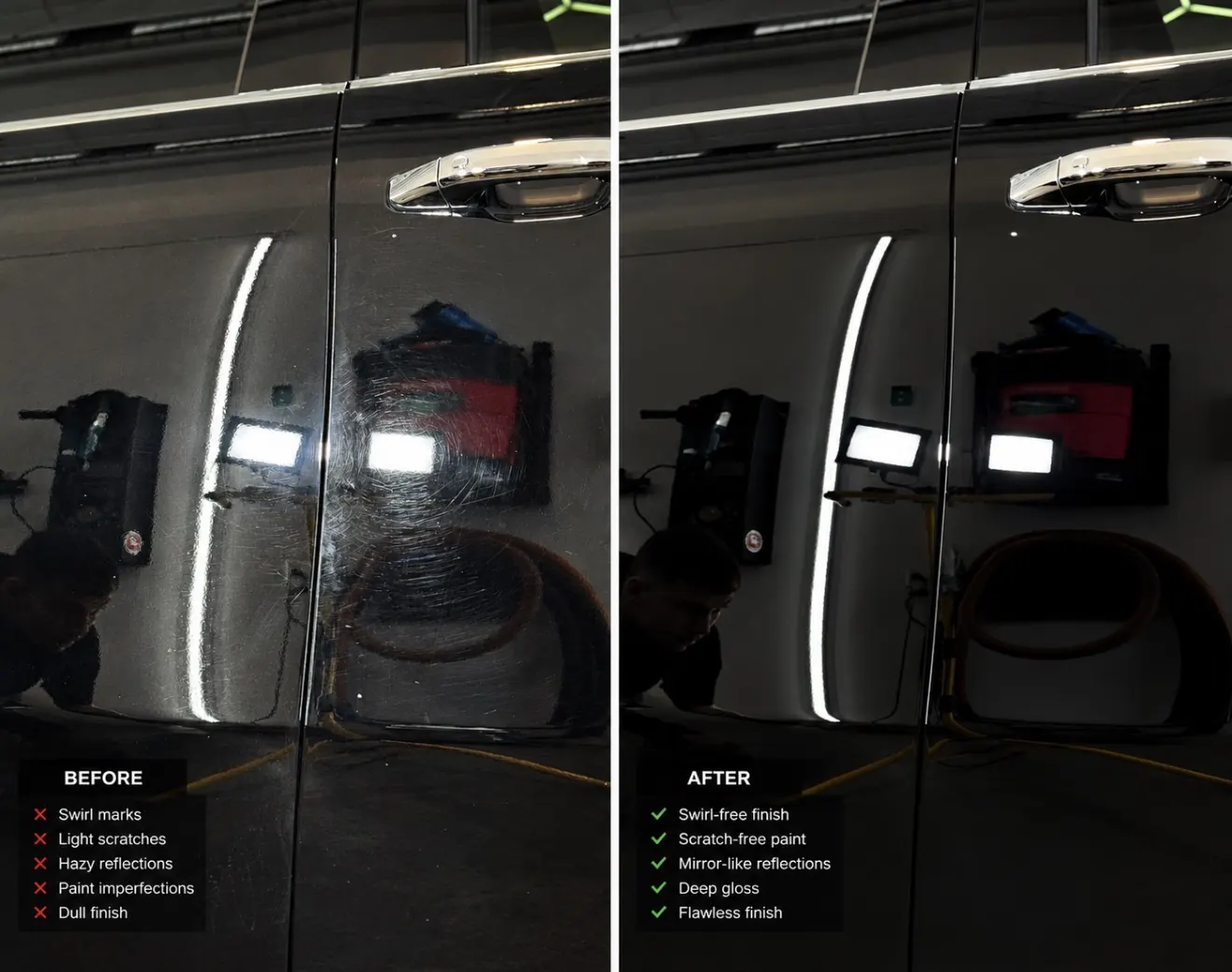
The sun test. Park in direct sun or stand under shop LEDs and tilt the panel. Spider-web swirls, haze, and dull rings that only show up under a strong light are exactly what machine polishing levels out. If the paint looks flat and cloudy even in open shade, the clear coat is oxidized and a correction will bring the depth back.
Correction is required before a ceramic coating for best results. A coating is a clear, ultra-durable layer that bonds to the clear coat, and it locks in whatever is underneath it. Swirls and haze that go in under a coating stay there for the life of that coating. Polishing first is what makes the coated finish look mirror-deep instead of glossy but cloudy. You can see the difference in a real job below, and read the full process on our paint correction page.